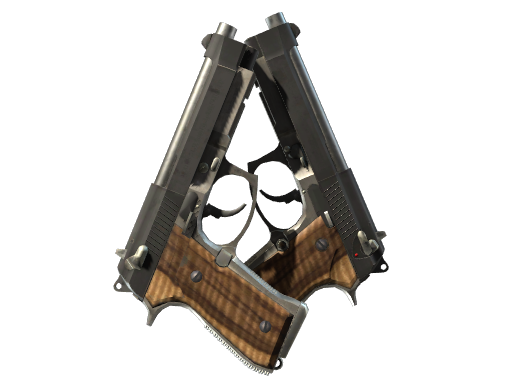
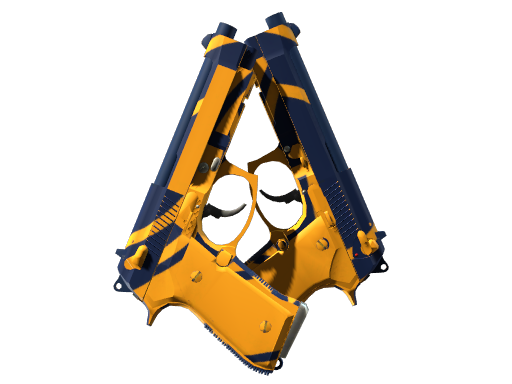
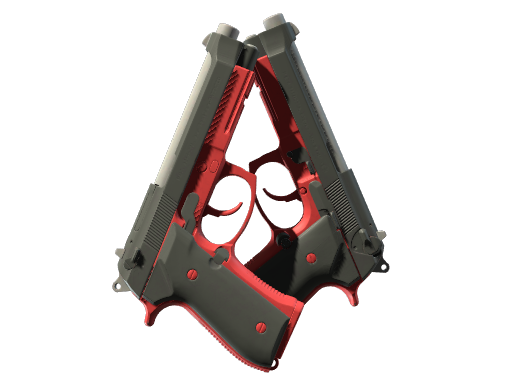
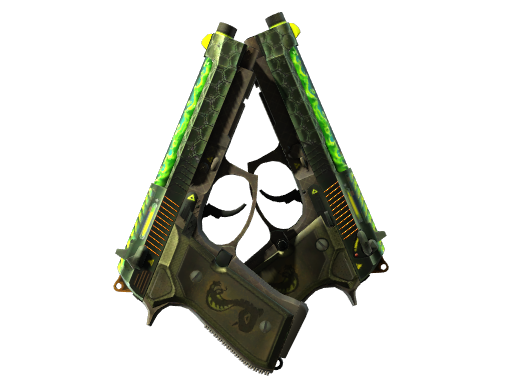
 The Lake Collection


 The Lake Collection






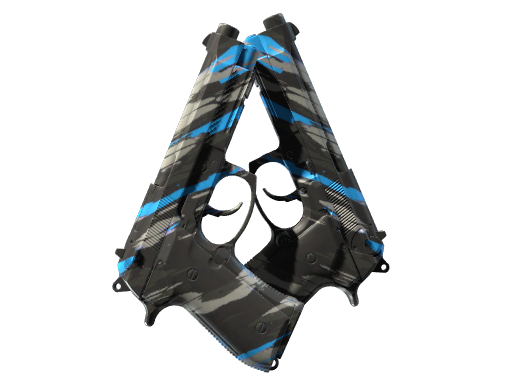
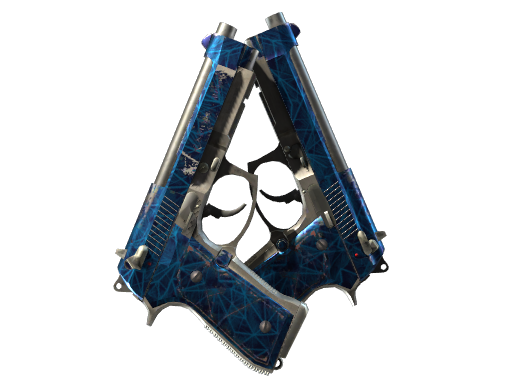
Firing two large-mag Berettas at once will lower accuracy and increase load times. On the bright side, you'll get to fire two large-mag Berettas at once. It has been painted with metallic paint and uses a crystallizing mask to create a pattern.
Everyone wants to make an impact












Click on market icons to enable/disable them.
View historical price changes and use the time filters to examine both short-term price movements and long-term market direction.
Explore other finishes available for the Dual Berettas. While the model remains the same, each skin offers a unique visual style, rarity tier, and market value within the CS2 ecosystem.
Dual Berettas Cobalt Quartz is a Restricted skin for the Dual Berettas in Counter-Strike 2. In this section, you'll find detailed information about its release, collection, float range, exterior qualities, and how it can be obtained.
This section addresses the most common questions players ask about the Dual Berettas Cobalt Quartz, including its price, drop source, float range, rarity and trade-up mechanics.
Dual Berettas Cobalt Quartz is part of the The Lake Collection
Dual Berettas Cobalt Quartz can be obtained from a case like other skins.
As the highest rarity item within its collection, this skin cannot be used in a trade-up contract to obtain a higher-tier item. Trade-up mechanics only allow progression to the next rarity level, and no further upgrade path exists within this collection.
Dual Berettas Cobalt Quartz itself can be obtained through a trade-up contract by using Mil-Spec skins from the same collection, such as SG 553 Anodized Navy , USP-S Night Ops and P90 Teardown . As with all trade-ups, the final float value is determined by the average float of the input items.
It is considered one of the oldest skins in Counter-Strike, having been part of the in-game economy for many years, which often contributes to lower overall supply and stronger collector interest.
The price of Dual Berettas Cobalt Quartz currently ranges from $0.4 to $1.23, depending on its exterior condition, float value, and market demand. Prices may fluctuate over time based on supply and trading activity.
 SkinSearch